David Rounce
Assistant Professor, Civil and Environmental Engineering
Assistant Professor, Civil and Environmental Engineering
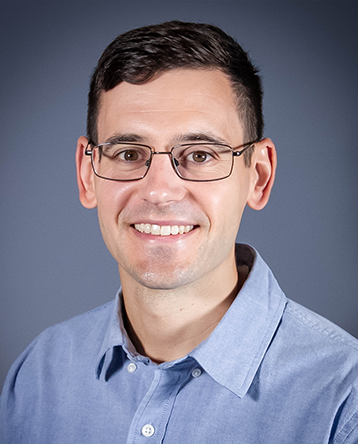
David Rounce joined the Civil and Environmental Engineering Department at Carnegie Mellon University in Fall 2020. He received his BS in civil engineering in 2010 from Villanova University and his master’s degree in environmental and water resources engineering in 2012 and Ph.D. in civil engineering in 2016 from the University of Texas at Austin. He conducted postdoctoral research in the Glaciers Group at the University of Alaska Fairbanks.
Rounce’s research seeks to quantify the response of glaciers, water resources, and hazards to climate change to inform adaptation and mitigation efforts at local, regional, and global scales. His work uses computational models informed by remote sensing and grounded in fieldwork to produce actionable information.
2016 Ph.D., Civil Engineering, University of Texas at Austin
2012 MS, Environmental and Water Resources Engineering, University of Texas at Austin
2010 BS, Civil Engineering, Villanova University
Civil and Environmental Engineering
A new international study projects loss for individual glaciers and warns of “peak glacier extinction,” finding that up to 4,000 glaciers could vanish each year.
The American Geophysical Union
CEE’s David Rounce has been selected by the American Geophysical Union as a recipient of the 2025 Cryosphere Early Career Award, which recognizes early career contributions to Cryospheric Sciences and Technology.
Civil and Environmental Engineering
A new study provides decision-makers with strategies to build infrastructure that can withstand the increased rainfall that is projected under climate change in the interim of precedented federal guidance.
CMU Engineering
A study published in Science finds that twice as much of the world’s glacier mass could be preserved by meeting the 1.5°C threshold set by the Paris Agreement.
Civil and Environmental Engineering
Climate change has exacerbated glacier outburst floods, posing a growing threat to nearby communities like Juneau, Alaska. Researchers are developing robust models to better understand and predict glacial flooding and how it will evolve in the future.
CMU Engineering
David Rounce was chosen for a research fellowship to study the effects of climate change and sea-level rise, and to develop coastal adaptation strategies in the Gulf of Mexico.
Civil and Environmental Engineering
CEE Assistant Professor David Rounce received the International Glaciology Society’s inaugural Firn Award for his pioneering research on debris-covered glaciers and glacier evolution modeling.
Civil and Environmental Engineering
At the 28th annual United Nations Climate Change Conference (COP28), CEE professors Destenie Nock and David Rounce discussed topics such as energy efficiency, climate mitigation, mountain glaciers, and global temperature rise.
Civil and Environmental Engineering
Marissa Webber, a current CEE PhD student, has been awarded the 2023 Freeman Fellowship for her outstanding work in climate change adaptation for urban infrastructure, with a focus on mitigating stormwater flooding, which highlights her dedication to sustainable solutions for urban areas.
NASA
CEE’s David Rounce responds to a NASA study that found half of glaciers vanish with 1.5 degrees of warming.
Civil and Environmental Engineering
PhD student Mira Khadka has been awarded the IPCC Scholarship for her research on remote sensing and modeling of mountain glaciers. Her work involves leveraging cloud computing to analyze satellite data, leading to valuable insights into glacier melt patterns.
Wilton E. Scott Institute for Energy Innovation
The Wilton E. Scott Institute for Energy Innovation’s Seed Grants for Energy Research program will support three research projects in the 2023 cycle.